Smoke Damage Restoration East Hampton NY | Odor Gone, Air Cleared
Professional soot removal, HVAC decontamination, thermal fogging, and clearance testing for East Hampton properties.
Quick Answer
Yes. Professional smoke damage restoration can fully eliminate smoke odor and soot from a home when all affected materials are properly treated. HVAC decontamination, thermal fogging, and ozone treatment address penetration into porous surfaces and ductwork. Surface-level cleaning alone without HVAC treatment will not produce lasting results.

East Hampton Restoration Services provides complete smoke damage restoration for homeowners and property owners across East Hampton, NY and all surrounding South Fork communities. Smoke damage is not just a cosmetic problem. Soot and smoke residue penetrate porous building materials, embed in HVAC systems, and leave chemical compounds in wall and ceiling cavities that persist long after the visible residue has been wiped away. We address smoke damage at every level, from surface soot on ceilings and walls to deep odor compounds locked into wood, insulation, upholstery, and ductwork, using IICRC-certified methods and equipment matched to the specific type of smoke and the materials it has affected. The result is a property restored to a clean, odor-free condition with air quality documented to confirm it.
Smoke damage situations in East Hampton range from severe fires that required fire department response to smaller events: a kitchen fire that filled the house with smoke before it was extinguished, a fireplace malfunction that pushed smoke into living spaces through a failed damper, a smoldering fire in an adjacent unit that sent smoke through shared HVAC into a condo. Each situation requires a different scope, and each is handled with the same thorough assessment and treatment process.
How Smoke and Soot Behave Differently
Smoke is a mixture of gases, fine particles, and chemical compounds. Soot is the visible solid component, the carbon particles that settle on surfaces. The two create different problems. Soot is the visible residue that stains ceilings, discolors walls, and coats hard surfaces. It etches into paint over time through a chemical process that makes it progressively harder to remove. Smoke gases and compounds are the source of persistent odor. These compounds penetrate porous materials and do not simply evaporate. They require specific neutralization chemistry or oxidation to be eliminated, not just covered.
Different fires produce different smoke characteristics. A fast, clean-burning fire produces dry, powdery soot that is easier to remove but travels farther. A slow smoldering fire produces wet, oily smoke with a stronger odor that penetrates deeply into porous materials. A protein fire from burned food produces nearly invisible but extremely pungent residue that covers every surface in a room with a thin film that is very difficult to identify and even harder to remove completely. We identify the smoke type and the materials affected before choosing cleaning methods.
Porous Surface Penetration
Drywall, wood trim, cabinets, upholstered furniture, clothing, insulation, and carpeting all absorb smoke compounds at a molecular level. These are not materials you can simply wipe clean. The compounds penetrate into the substrate and continue to off-gas odor over time. The older the building, the more porous the materials tend to be. Many East Hampton homes built before 1970 have original plaster walls, solid wood trim, and older hardwood flooring that absorbs smoke more readily than modern materials. Treatment for these surfaces requires specific enzyme-based cleaners, ozone exposure, or in severe cases, removal and replacement, documented appropriately for the insurance claim.
HVAC and Ductwork Contamination
The HVAC system is the most common pathway for smoke to spread from the fire zone to unaffected areas of a property. Smoke enters the system through return air registers within seconds of a fire event. It coats the blower wheel, evaporator coil, and every duct surface it contacts. If the system is operated after smoke contamination without full cleaning, it re-circulates smoke compounds and soot particles throughout the home with each cycle.
HVAC decontamination is a mandatory part of every smoke damage restoration we perform. It includes the air handler, all ductwork, registers and grilles, and in many cases the return air plenum. We work with duct cleaning professionals where needed and confirm with post-treatment air quality testing that the system is not re-introducing contamination after restoration is complete. See our fire and smoke damage restoration page for more on the full fire restoration process.
Ozone and Thermal Fogging Methods
Two primary methods are used to neutralize smoke odor after structural cleaning is complete. Both go beyond surface treatment to address the odor compounds that have penetrated building materials.
Ozone generation produces a reactive oxygen molecule (O3) that oxidizes odor compounds at the molecular level, converting them to odorless byproducts. Ozone treatment requires that the space be vacated by all occupants and pets for the duration of treatment and for a period afterward for the ozone to dissipate. Ozone does not mask odor. It chemically neutralizes the compounds causing it.
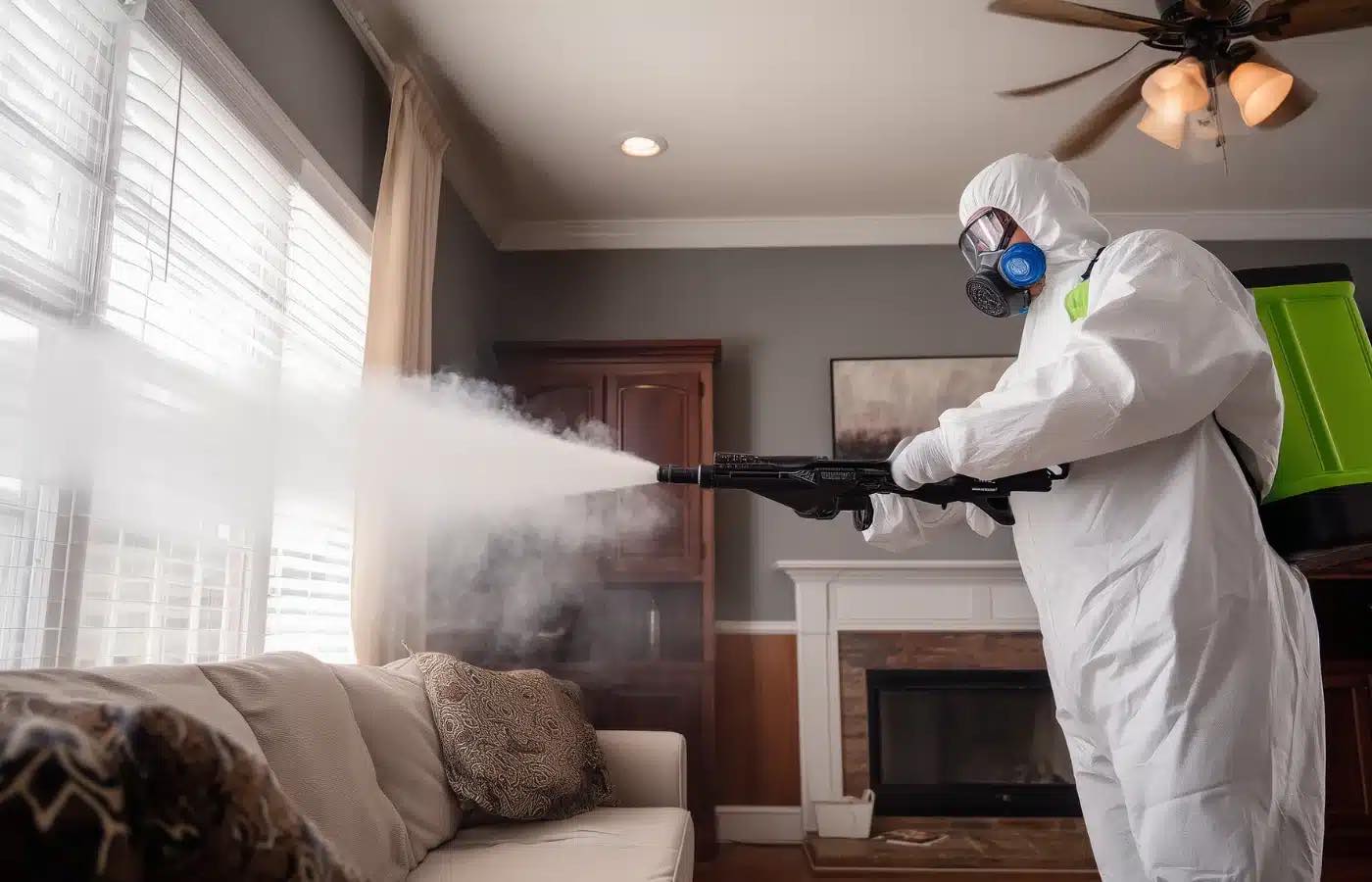
Thermal fogging introduces a deodorant agent as a fog heated to a high temperature, causing it to penetrate the same pathways smoke traveled, including wall cavities, porous surfaces, and furnishings. The fogging agent contacts odor compounds in concealed areas that surface cleaning cannot reach. Both methods are used in sequence on more severe smoke damage situations, and neither replaces the structural cleaning that precedes them.
Odor Timelines
After professional smoke damage restoration, residual odor should not be detectable by the time treatment is complete. If odor persists after cleaning and deodorization, it means a source has been missed. The most common missed sources are contaminated HVAC components, insulation in attic or wall cavities that was not removed, and contents such as upholstered furniture or drapes that were not included in the cleaning scope. We perform a final walkthrough with an odor inspection before closing every smoke damage job and return to address any source that has not been fully resolved.
What Gets Cleaned vs. What Gets Replaced
- Hard, non-porous surfaces: cleaned in place using dry chemical sponging followed by appropriate wet cleaning chemistry
- Painted drywall with moderate soot: cleaned, primed with odor-blocking primer, and repainted
- Drywall with severe contamination or wet smoke penetration: removed and replaced
- Insulation: removed and replaced when exposed to smoke, since it cannot be cleaned effectively
- Hardwood and solid wood trim: typically cleanable with appropriate chemistry and may require re-finishing
- Upholstered furniture and carpeting: depends on saturation; some can be cleaned by contents restoration specialists, others must be replaced
- HVAC components: cleaned and treated in place; filters replaced
Insurance documentation: Every item cleaned or replaced in a smoke damage restoration is documented with photos and written scope to support your insurance claim. Contents replacement is typically covered under the personal property section of your homeowner policy. We coordinate with your adjuster throughout the process.
When mold has developed in areas affected by smoke or by firefighting water, we address it concurrently per mold remediation protocol, so the full scope is handled in one coordinated project rather than two separate engagements.
Smoke Damage FAQ
Persistent smoke odor weeks after a fire means odor compounds have penetrated into porous materials or the HVAC system and have not been neutralized. Consumer air fresheners mask odor temporarily but do not address the source. Professional restoration using ozone generation and thermal fogging reaches the compounds in wall cavities, ductwork, and saturated materials that surface cleaning cannot access.
Prolonged exposure to smoke residue and soot can cause respiratory irritation, headaches, and aggravated allergy and asthma symptoms. The fine particles in soot are small enough to be inhaled deeply into the lungs. Smoke contains VOCs (volatile organic compounds) that continue to off-gas from affected materials long after the fire event. If occupants are experiencing symptoms, the property should be assessed and treated promptly.
Possibly. The extent of treatment needed depends on the type of smoke, how long it was present, and whether the HVAC system was running during or after the fire. We use air quality testing and visual inspection to determine where smoke has traveled and what materials have been affected. For a small kitchen fire caught quickly with the HVAC off, treatment may be limited to the kitchen and immediately adjacent areas. If the system was running, the scope expands significantly to include ductwork and all supply and return areas throughout the home.
Smoke Damage Restoration Service Area
We serve East Hampton and all communities within 50 miles.